Taxes for Content Creators: How to Keep Your Earnings from YouTube, Twitch, and AdSense Safe in 2026
Thanks to modern digital tracking mechanisms (such as the DAC7 directive), both the European Union and Czech tax authorities now have much greater visibility into the digital space than ever before. The good news is that staying fully compliant isn't rocket science once you know the rules.
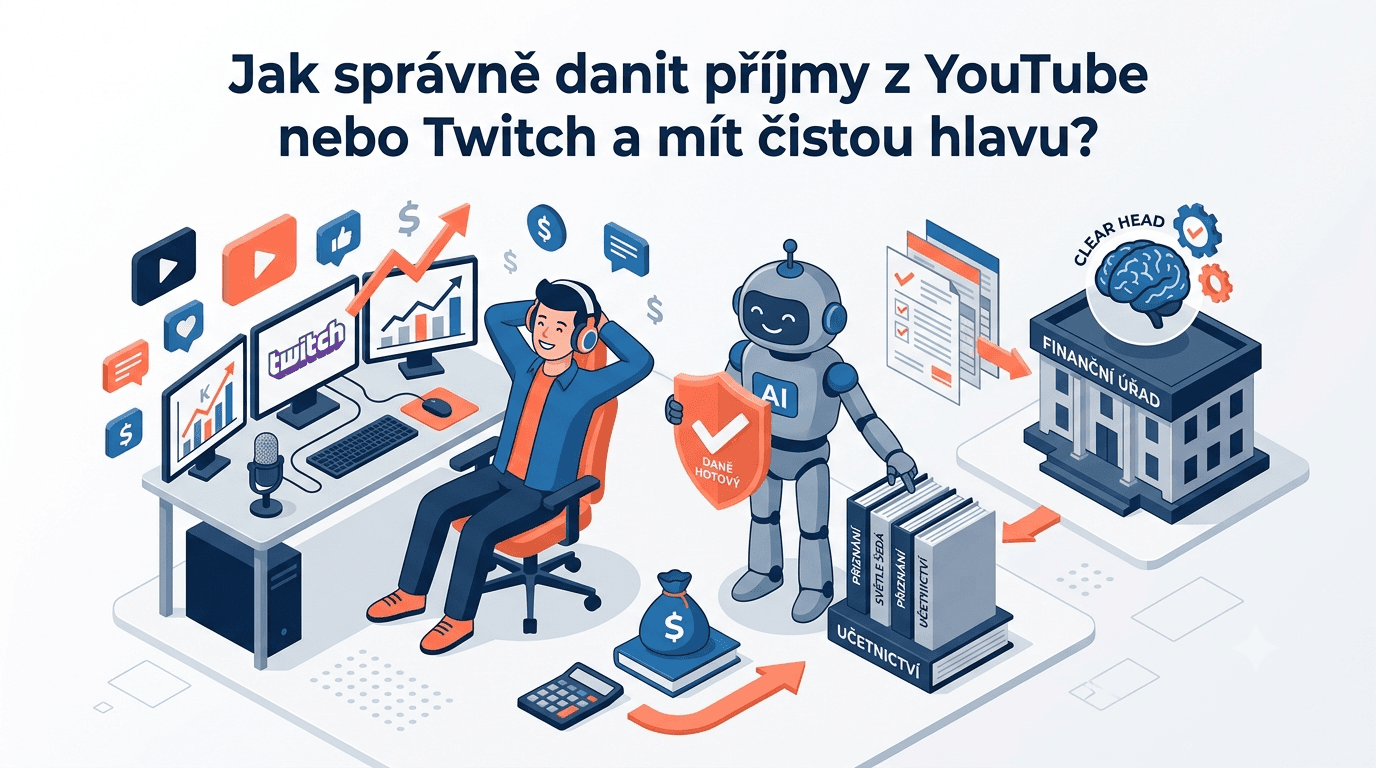
The Myth of the Czech Bank Account: When Do You Actually Earn the Money?
One of the most common questions creators ask is: "Do I have to pay tax on money even if it’s still sitting in my PayPal balance or inside the Google AdSense dashboard?"
The short answer is yes. For tax purposes, it does not matter when you transfer funds to your traditional Czech bank account. What matters is the exact moment you gain control over the funds—meaning when they land in your virtual wallet on the given platform, not when you transfer them onwards. Once content creation generates regular income, consider it a clear signal that it is time to register for a trade license (OSVČ).
For full context: if the activity is genuinely accidental and non-recurring (not regular video production or streaming), there is an annual tax-exempt limit of CZK 50,000 for occasional income. However, as soon as you create content systematically and with the intent to earn money, you no longer qualify for this exemption—even if the amounts involved are small.
Donates and Barter Deals: Are They Really Gifts?
The online world uses terms that tax legislation interprets quite differently:
- Fan Contributions (Donates): Although the word "donate" suggests a gift, from a legal perspective, it is compensation for your work—specifically for broadcasting or producing content. Therefore, it belongs in your standard tax return.
- Free Products (Barter): When a brand sends you a new camera or clothing in exchange for a review or social media posts, it is not a gift. It is non-monetary income. It must be valued at fair market price and included in your total income.
The Administrative Puzzle: Identified Person (Identifikovaná osoba)
This is the topic that confuses content creators the most. If you earn ad revenue from YouTube, you are technically providing a service to Google, which is headquartered in Ireland (another EU member state).
As soon as your first payment arrives, you automatically become an Identified Person for VAT by law. Don't worry—this does not mean you become a full VAT payer or that everything will become more expensive for you. It is purely an administrative status that applies regardless of how small the payout is. It simply means you must register with the tax office and submit monthly reports (Summary Reports and, if applicable, VAT returns) for the months in which cross-border transactions occurred.
Do not confuse an Identified Person with a full VAT payer—that is a separate category with different thresholds. You only become a full VAT payer when your turnover exceeds statutory annual limits.
For 2026, two calendar-year thresholds apply:
- CZK 2,000,000 – Exceeding this limit makes you a VAT payer automatically from January 1 of the following year (or voluntarily from the day after exceeding it, if selected in your application).
- CZK 2,536,500 – Exceeding this higher threshold requires you to become a full VAT payer immediately on the second day following the breach, without waiting for the new year.
In both cases, you must submit a registration application within 10 business days of crossing the threshold. Full VAT registration brings significantly more administrative duties (regular VAT returns, control statements) than the Identified Person status, so it pays to monitor your approaching turnover well in advance.
Don't Forget Social and Health Insurance
Alongside income tax, creators operating as sole traders (OSVČ) face another obligation that is easy to overlook: social security and health insurance contributions. Once you obtain your trade license, you must pay monthly advances for both, even during months when business is slow or when you are just starting out.
If content creation is your primary self-employed activity, you must pay at least the statutory minimum monthly advances. For 2026, these amounts are:
- Minimum health insurance advance: CZK 3,306 per month (payable by the 8th day of the following month).
- Minimum social security advance: CZK 5,005 per month (payable by the end of the current month).
These minimums change annually and gradually increase, so always verify them at the start of each year.
If content creation is a secondary activity (e.g., alongside full-time employment or studies), the rules are more flexible: the minimum social security advance drops to CZK 1,574 per month, and no advances are required at all until your annual net secondary income exceeds the decisive threshold—which is CZK 117,521 for 2026. Anything owed above minimum levels depends on your actual net profit—the more you earn, the higher your advances will be for the following year based on your annual reports to the health insurance provider and the Czech Social Security Administration (ČSSZ).
Flat-Rate Expenses, Actual Costs, or Flat Tax?
When it comes to filing your income tax return, you have three options:
- Lump-Sum Expense Deduction (60% Flat-Rate): If you create content from home with minimal overhead, you can let the state automatically recognize 60% of your total income as virtual expenses. You don't need to track receipts, and you only pay tax on the remaining 40%. This option is capped at an annual income of CZK 2,000,000—meaning the maximum deductible expense using this method is CZK 1,200,000. Any income above this cap cannot use the percentage deduction and requires tracking real expenses or accounting records.
- Actual Expenses: If you invest hundreds of thousands of CZK in hardware, studio rentals, expensive software subscriptions, or hire video editors and graphic designers, it pays off to keep actual invoices and maintain tax accounting records.
- Flat Tax Regime (Paušální daň): For creators with low-to-mid incomes, there is a third option—a single monthly payment combining income tax, health insurance, and social security. This eliminates the need for separate annual tax returns or insurance reports. To qualify, you must not be a full VAT payer and your annual income must not exceed CZK 2,000,000.
Depending on your income level and structure, the tax authority assigns you to one of three tiers for 2026:
- Tier 1: CZK 9,162 per month
- Tier 2: CZK 16,745 per month
- Tier 3: CZK 27,139 per month
Always calculate in advance whether this regime is truly beneficial for your situation—especially if you claim tax credits or dependent child allowances, which are forfeited under the flat tax system.
Peace of Mind for Your Creativity
Digital creator taxation comes with unique rules—from US W-8BEN tax forms to cross-border EU VAT compliance. However, when your foundation is structured correctly from day one, tax compliance stops being intimidating and simply becomes a smooth part of a successful business.
Want to ensure your platform income is fully optimized and tax-compliant? At TaxVision, we bridge modern technology with specialized tax expertise. Get in touch with us today—we'll handle the paperwork so you can focus on what you do best: creating.
Need help with taxes, accounting, or payroll?
Write us a message and our specialists will get back to you shortly.
You might also like
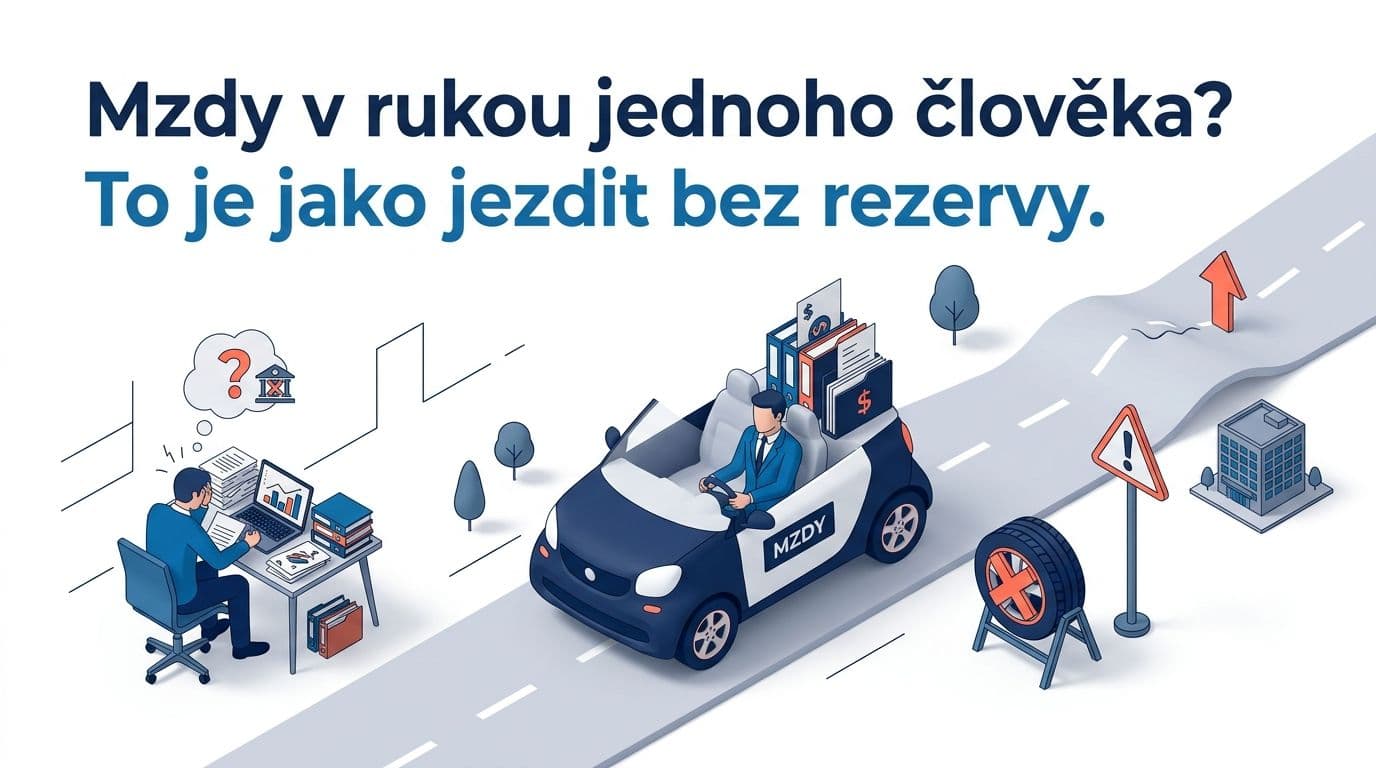
Autumn… the leaves are falling, companies are planning next year’s budgets, and HR departments are quietly thinking: “I just hope our payroll accountant doesn’t come down with the flu on payday again this year.” You know the feeling. Payroll is one of those things nobody really talks about as long as it works. But the moment it stops working, suddenly everyone is talking about it.
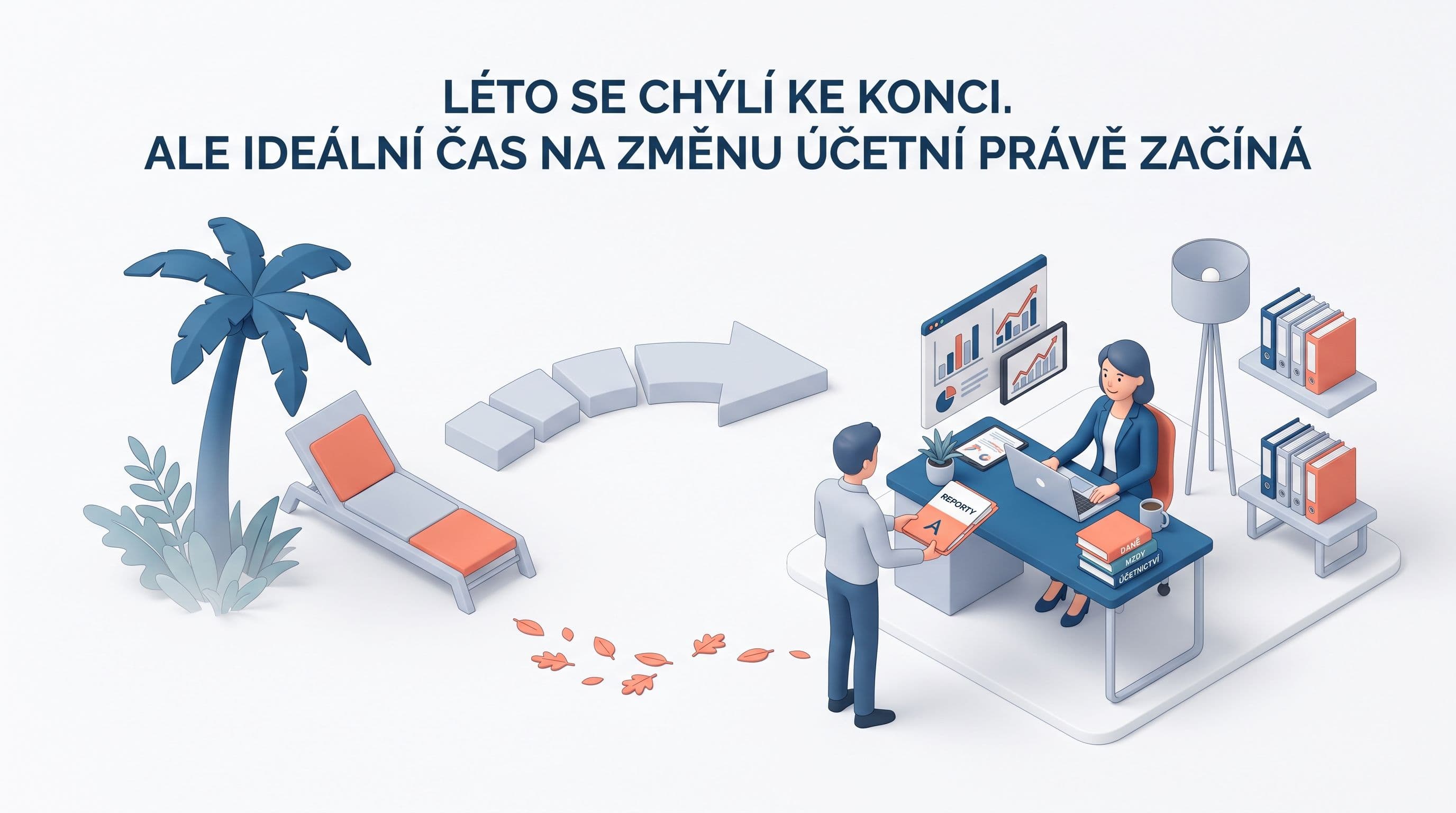
Vacations are slowly winding down, children are getting ready for school, and businesses are returning to their usual autumn rhythm. If you’ve felt for some time that your current accounting firm isn't keeping up, fails to answer your calls, or that your books are held together purely by willpower, you might be thinking: "We’ll just push through until the end of the year and make the change in January."
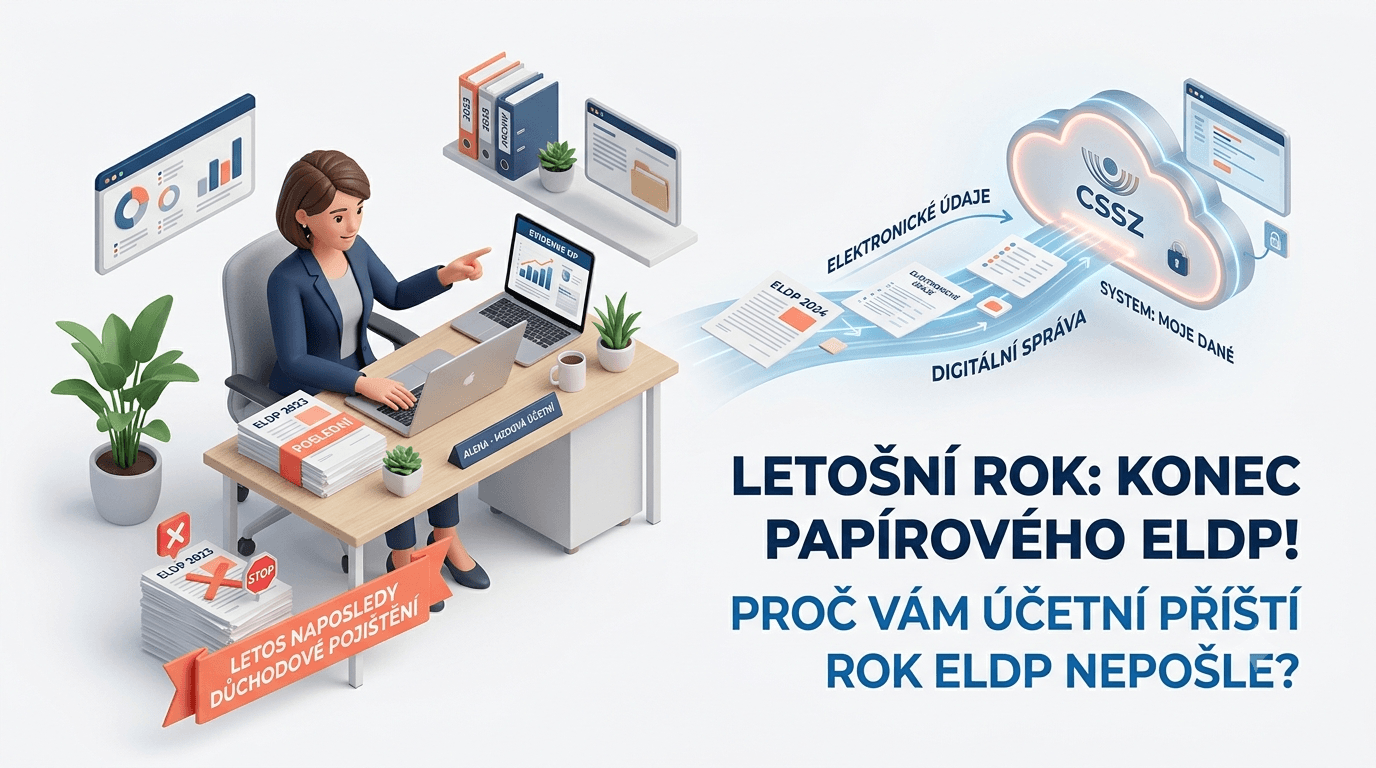
Když vám vaše mzdová účetní letos předala Evidenční list důchodového pojištění (ELDP) za rok 2025, možná jste ho jen rychle a bez přemýšlení založili do šuplíku 🗄️. Věděli jste ale, že jste drželi v ruce historický kousek? S tímto nenápadným dokumentem jste se totiž letos setkali naposledy. Pojďme si připomenout, k čemu vlastně ELDP slouží, proč je tak důležitý a jaká velká změna nás v rámci digitalizace státu právě teď čeká.